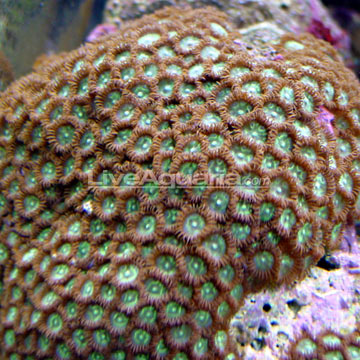
Coral Friends
Corals, the ocean's heart. Natural Science project
martes, 7 de mayo de 2013
Coral Reefs: Information about them.
A coral is a comunity of marine organisms called polyps that develop on a reef , the polyp to from the coral colonies doubled. Coral colonies grow on top of each other , gradually formin a coral reef. And coral reefs produce a habitat for a variety of other animals and plants
Corals are essential to enable the reproduction and development of fish ans species such as lobster. Corals are very sensitive to enviromental chages. Too much sediment, sand or mud, water can destroy them.For that reason, coral reefs do not grow near the mouths of rivers. And with the increase of storms, hurricanes and temperature changes, the scientifics says that 50% of the coral reefs can be destroyed in 2030.
The coral reef exist only in warm waters; there is not trace of them at a thepth of over 50 metes or 165 feets. The reason is that corals live in a symbolic relationship with unicellular zooxanthellae (algae) that carry their tissues , which , in addition they acting as a dietary supplement used to eliminate certain waste. Coral Reefs exist in a wide area of the underwater world, and are the result of a process that has lasted hundreds of millions years. Based on the way they grow, we can characterize the form of coral reefs: Strip Reef, Barrier Reef, coral platform and Atoll.
domingo, 5 de mayo de 2013
LET´S HELP THE GREAT BARRIER REEF!!
You can imagine the spectacle that is a barrier Reef that spans
thousands of miles and can only
be viewed in full by an astronaut in space? With
2,200 miles long,
the Great Barrier Reef of Australia is made up of a myriad of corals. The Great Barrier
Reef generates over $ 4 billion
annually to Australia and receives about 2
million visitors each year, with about 1500 vessels operating various
tours. if we do
not protect and care disappear completely, and not just be a natural disaster but
also economic and tourist, so LET'S
HELP THEM.
THE GROTH
OF THE CORALS
The growth of corals
is affected by several factors. One is the water temperature, the other
is the salt. Fresh water from rivers that empty into the
sea does not allow corals to grow in those areas. The Barrier forms many islands,
being that many of them today harbors wonderful
resorts or are
completely deserted. You can
camp in some of them with conservation department approval, but must carry
everything you will use, primarily
water, food, and sunscreen.
Facts about the Great Barrier Reef
As
the largest living structure on the planet, the Great Barrier Reef is
incredibly rich and diverse.
Stretching
2300 kilometres, this natural icon is so large it can even be seen from outer
space.
While
it’s known mostly for its large maze of colourful reefs, its intricate
architecture also provides a home for a huge number of plants and animals.
Some
of these, such as turtles and crocodiles, have been around since prehistoric
times and have changed little over the millennia.
The
breathtaking array of marine
creatures includes 600 types
of soft and hard corals, more than 100 species of jellyfish, 3000 varieties of
molluscs, 500 species of worms, 1625 types of fish, 133 varieties of sharks and
rays, and more than 30 species of whales and dolphins.
The
Great Barrier Reef is also unique as it extends over 14 degrees of latitude,
from shallow estuarine areas to deep oceanic waters.
Within
this vast expanse are a unique range of ecological communities, habitats and
species – all of which make the Reef one of the most complex natural ecosystems
in the world.
·
covers
344,400 km2 in area
·
includes
the world’s largest coral reef ecosystem
·
includes
some 3000 coral reefs, 600 continental islands, 300 coral cays and about 150
inshore mangrove islands
·
extends
south from the northern tip of Queensland in north-eastern Australia to just
north of Bundaberg
·
is
between 60 and 250 kilometres in width
·
has
an average depth of 35 metres in its inshore waters, while on outer reefs,
continental slopes extend down to depths of more than 2000 metres
·
was
created in 1975 through the Great Barrier Reef Marine Park Act
·
extends
into the airspace above and into the earth beneath the seabed.
Just how big is the Great Barrier Reef Marine Park?
·
bigger than Victoria and Tasmania
combined
·
bigger than the United Kingdom,
Switzerland and Holland combined
·
roughly the same area as Japan,
Germany, Malaysia or Italy
·
approximately half the size of
Texas
·
slightly smaller than the entire
Baltic Sea.
·
The Great Barrier Reef
Marine Park stretches approximately 2300 km along the coast of Queensland in
north-eastern Australia – this is about the same length as the west coast of
the USA from Vancouver to the Mexican border.
·
The Belize Reef off
the Caribbean coast of Belize is the second longest barrier reef in the world
at 290 km, while Ningaloo Reef off the West Australian coast is 280 km long.
RESOURCES: http://www.gbrmpa.gov.au/
CORAL REEFS
Coral reefs are the most diverse and beautiful of all marine habitats. Large wave resistant structures have accumulated from the slow growth of corals. The development of these structures is aided by algae that are symbiotic with reef-building corals, known as zooxanthellae. Coralline algae, sponges, and other organisms, combined with a number of cementation processes also contribute to reef growth.
The dominant organisms are known as framework builders, because they provide the matrix for the growing reef. Corals and coralline algae precipitate calcium carbonate, whereas the framework- building sponges may also precipitate silica. Most of these organisms are colonial, and the slow process of precipitation moves the living surface layer of the reef upward and seaward.
The reef is topographically complex. Much like a rain forest, it has many strata and areas of strong shade, cast by the overtowering coral colonies. Because of the complexity, thousands of species of fish and invertebrates live in association with reefs, which are by far our richest marine habitats. In Caribbean reefs, for example, several hundred species of colonial invertebrates can be found living on the undersides of platy corals. It is not unusual for a reef to have several hundred species of snails, sixty species of corals, and several hundred species of fish. Of all ocean habitats, reefs seem to have the greatest development of complex symbiotic associations.
Branching and Mound-Shaped Corals
Photo by Phil DustanReef-building corals may occur in a variety of growth forms, and there often is strong variation in coral shape even within a species. In this photograph, we can see the branching elkhorn coral Acropora palmata (upper left), with arms showing strong orientation into an oscillatory current between left and right. In the right foreground is the mound-shaped coral Montastrea annularis. It is of great interest that such differently shaped corals can occur side by side. What might that indicate to you?
Intraspecific Variation in Growth Form
Here is an intraspecific example of variation in growth. We see two colonies of Montastrea annularis, but one (center) is platy in appearance, whereas the other (right) is more mound-shaped.
Deeper Water form of "Monastrea annularis"
Photo by Phil DustanIn deeper waters (ca. 30 m) in the reefs of the north coast of Jamaica, one finds a greatly flattened species of Montastrea, which is a very close relative of the mound-building shallow water Montastrea annularis. The flattened mushroom-like shape may be an adaptation to capture light efficiently.
Plate-like Growth of Agaricia sp.
Photo by Phil DustanBy contrast, species of Agaricia tend to be plate-like in form and do not display nearly as much variation as some other dominant corals on the reef. A large fauna of sponges, bryozoans, articulate brachiopods, and other sessile epibenthic invertebrates live on the undersides of these platy corals.
Oriented Branches of the Elkhorn Coral
Photo by Phil DustanHere we see the occurrence of a group of colonies of the elkhorn coral Acropora palmata, with arms conspicuously oriented left to right. This probably reflects a predictably strong bidirectional current. Because of the extensive growth plasticity of some corals, it is often difficult to distinguish between distinct biological species and plasticity of form within a species.
Platy Form of the Elkhorn Coral
Dancing Lady Relief, Jamaica
Photo by Phil DustanThis shot of a reef on the north coast of Jamaica vividly captures the large amount of shade cast by the dominant elkhorn coral Acropora palmata. Because reef-building corals depend upon zooxanthellae for colony growth, the shaded areas are not good areas for vigorous coral growth, which depends upon light.
Hexacoral Polyps, Closeup
Photo by Robert RichmondHexacoral polyps (e.g., stony corals) have tentacles in groups of six. In hermatypic - or reef-building - corals symbiotic zooxanthellae are found within the endoderm and are usually concentrated in the tentacles, which increases exposure to light. The tentacles are also the site of enormous numbers of nematocysts, which can ensnare or puncture prey.
Polyps of Montastrea cavernosa
Photo by James W. PorterThis is a closeup of the massive scleractinian coral Montastrea cavernosa. The tentacles capture smaller zooplankton, by means of nematocysts.
Octocoral Polyps
Photo by Robert RichmondOctocoral polyps (e.g., sea whips, sea fans) have 8 tentacles, instead of 6. Particles such as smaller zooplankton are probably captured by direct interception on the tentacles. In some cases, such as in sea fans, water streams around the colony and polyps capture particles in the quiet eddies that are formed on the downstream side of the colony.
Crown-of-Thorns Starfish, Acanthaster planci
Photo by Robert RichmondAcanthaster planci is a carnivorous asteroid starfish whose principal prey are corals. It has sharp dorsal spines that penetrate human skin and cause sickness. Normally it occurs at low density and is nocturnal. In the 1960s, population explosions were found all over the Indo-Pacific and the starfish were moving in large numbers during the day. Instead of being of minor impact, they were now major predators on the reef. In Guam, for example, over 90% of the corals were killed. The explanation of the origin of the outbreaks is still very controversial. Charles Birkland suggested that they were related to storms that could wash out nutrients from atolls, which stimulated phytoplankton grown, which, in turn, increased the survival of starfish planktotrophic larvae. Others have argued that larval starvation is not a limiting factor in larval survival. It was also argued that typhoons and other storms killed corals, causing starvation among the starfish and a switch to roving in aggregations in search of food.
Pacific shallow reefs are often dominated by the the erect coral Pocillopora damicornis. When the crown-of-thorns starfish tries to mount and consume the coral, several species of shrimps and crabs that live among the coral branches move to attack the starfish, thus defending the coral.
Atoll
Photos by Robert RichmondAn atoll is a ring- or horseshoe-shaped group of islands, surrounding a lagoon. Coral reefs line the inner and outer parts of the island. Darwin hypothesized that the earth's crust was slowly sinking, and that corals were growing upward and keeping up with the overal sinking rate. At first, a submarine volcano might be jutting out into the sea, but sinking led to the ring of coral reefs around the volcano to grow upwards and form the islands. While most agreed with this hypothesis, the geologist Harry Ladd confirmed it by leading a drilling team to this region. The team drilled through hundreds of meters of coral reef rock before reaching volcanic rock below of Eocene age.
Clownfish with Anemone
Photo by Robert RichmondThe arrow points to a clown fish, Amphiprion clarkii, one of many members of the fish family Pomacentridae. Clown fish maintain a fascinating mutualism with sea anemones and may even lie within the anemone's tentacles. The fish gradually picks up some of the mucus from the tentacles and the anemone eventually fails to recognize the fish as prey or as an intruder.
Clown Fish Among Anemone Tentacles
Photo by Don Hesler
French Angel Fish
Photo by Jean BillerbeckThis shot was taken on a Caribbean coral reef. Pomacanthus paru is quite common and reaches lengths of 30 cm or more. The French Angel feeds mainly on sponges.
Stonefish, Thailand
Photo by Don HeslerThe Indo-Pacific Stone Fish, Synanceja horrida, is a member of the family Scorpaenidae and lives cryptically beneath rocks and within crevices. Its dorsal spines are deadly and inject stonustoxin, one of the most virulent toxins in the world, which causes hypotension and respiratory difficulties and is commonly fatal to those people who step on them. The toxin affects neuromuscular junctions.
Lionfish, Thailand
Photo by Don HeslerThe Lionfish, Pterois miles, is also a member of the family Scorpaenidae and also has toxic spines, but is far more visible than the Stone Fish, to the degree that it appears that it is "advertising" its presence by means of bright coloration. Its spine tissue contains acetylcholine and a toxin that affects neuromuscular transmission. Nevertheless it does have some successful predators, including the cornetfish, Fistularia commersonii.
Filament-tipped Prawn Goby, Thailand
Photo by Don HeslerMany species of goby in tropical sands burrow and share their burrow with a mutualistic shrimp. The associations are species specific. Typically the shrimp burrows and maintains the burrow, while the goby guards against mobile predators. This species, Stonogobiops nematodes, usually occurs in pairs in sandy bottoms deeper than 15 m, and lives in association with an Alpheus shrimp.
Porcupinefish
Photo by Don HeslerWhen confronted by a predator, the porcupine fish can inflate its body, which projects a prickly surface of spines. This species has a pair of specialized jaws that are used to crush hard prey, such as mollusks.
Oriental Sweetlips, Thailand
Photo by Don HeslerOriental Sweetlips, Plectorhinchus vittatus, occur as adults in seaward reefs or in clear open lagoons. The juveniles are found in more protected areas. Adults usually occur individually, but may be found in schools.
Feather Star, Cenometra bella
Feather stars (comatulid crinoids, Class Echinodermata) are prominent and lovely features of coral reefs, although they also occur in higher latitudes. Most conspicuous are the arms, which are festooned by pinnules, which, in turn, bear tube feet that capture small zooplankton by direct interception. The upper right photo shows the cirri, which can grip the substratum. The upper left photo shows the disposition of the pinnules in a plane, which probably corresponds to the location of the feather star (bottom) in open habitats, which are often subjected to unidirectional currents.
Snail Cyphoma gibbosum on a Sea Fan
Photo by Robert RichmondSpecies of the carnivorous gastropod Cyphoma occur in the Caribbean. They are often carnivores on octocorals, such as the sea fan, Gorgonia ventalina, shown at left. They leave a characteristic grazing trail of dead coral tissue. In the Carribean, Cyphoma gibbosum are notable for being preda- tors of the gorgonian Plexaura homomalla, which has very high concentrations of secondary compounds that deter many other species of predators. The snail consumes the tissue, and has high concentrations of some detoxifying compounds. C. gibbosum is a generalist and preys on a number of different prey species, each of which is armed with differing anti-predator compounds. Catherine Van Alstyne and Nancy Targett showed that the sea fan pictured at left harbors compounds that strongly reduce the feeding rate of C. gibbosum, but obviously do not stop predation completely.
Egg-Laying by Cyphoma gibbosum on Octocoral
Photo by Drew HarvellThis photo shows a female flamingo tongue Cyphoma gibbosum, with eggs that she has laid on an octocoral that she just fed upon and stripped off the tissue. This demon- strates an interesting relationship that is common among carnivorous inverte- brates: the source of food may also be a substratum for egg laying. Why is such behavior only likely when a colonial species is the prey?
Coral Acropora sp. Spawning
This shot shows a Pacific Acropora colony spawning. You can see the pink egg packets emerging. Mass spawning has proven to be one of the most exciting coral reef discoveries in recent years. In the Great Barrier Reef of Australia and at the Flower Gardens off the coast of Texas, many species of coral have been observed to spawn during the same night. This is a response to lunar cycles and ensures a maximum of fertilization success for each of the species independently.
Coral Planula Larva
Photo by Robert RichmondPlanula larvae of reef-building corals are as yet very poorly known ecologically. It is not clear as yet how far they travel and what mechanisms they employ to locate suitable sites upon which to settle. Robert Richmond was interested in the apparent widespread distribution of the coral Pocillopora damicornis, which extends from Africa to Panama. He found that planula larvae could be kept alive in a laboratory container for over 100 days and then were competent to settle and metamorphose. This implied that the larvae could survive a trip over the greatest expanse of the Pacific between distant sites of land.
Newly Settled Coral
Photo by Robert RichmondThe pioneering work of Paul Sammarco demonstrated that coral larvae, despite their potential long life in the plankton, may not be traveling very far from their point of origin. Using settling plates around a patch reef, newly settled coral colonies like the one at left were collected. Using a model based upon measurements of local currents, settlement was predicted to occur in great concentrations in a few spots on the patch reef, which was confirmed with recruitment studies. Settling plates demonstrated that larvae did not go far from the patch reef before they settled.
Polyp Bailout
Photograph by Paul W. SammarcoPaul Sammarco and Robert Richmond discovered that polyps, even after secreting a calcareous skeleton can "bail out," and swim into the water. This can occur, for example, just after a planula larva has settled, metamorphosed, and secreted a skeleton. The bail out occurs in response to poor conditions, such as poorly oxygenated water.
Patch Reef in Guam
Photo by Robert RichmondThis photograph of a patch reef shows the complexity of species coexistence, even if we cannot exactly identify all of the species. As discussed in the text, coral competitive interactions are diverse and result in a good deal of complexity in the outcome of competition and succession.
Jacks
Photo by Robert RichmondThis shot was taken on a coral reef in the Grenadine Islands, Caribbean Sea. Jacks are swift-swimming carnivores, usually feeding on other fish.
Reef Crest, Discovery Bay, Jamaica, 1970s
Photo by Phil Dustan
Serpulid Growing in Coral
Photo by Robert RichmondThese polychaetes secrete a calcareous tube and have a crown of ciliated tentacles that collect particles from the water column. The worm has a conical operculum that can seal off the tube when the worm withdraws.
"Killer Clam" Tridacna
Photo by Robert RichmondYou can see from above the fleshy parts of the so-called killer clam. Tridacna species are bivalves that maintain an exquisite symbiosis with algae known as zooxanthellae. These microorganisms, dinoflagellates actually, also occur in many other groups including corals and sea anemones. As in the other cases, the zooxanthellae transfer dissolved carbon to the animal host, which benefits from the nutrition. Tridacnas also suspension feed, and there is a good deal of variation in the proportion of energy derived from zooxanthellae, versus feeding upon suspended food (i.e., phytoplankton).
Caribbean Urchin Diadema antillarum
Diadema antillarum is a common urchin in the Caribbean, or at least it was until a disease nearly drove it to extinction in the late 1980s. The picture at left shows the stark white landscape left by urchin grazing.
Diadema antillarum
Photo by James W. PorterDiadema antillarum feeds on fleshy algae, but also can feed on many species of sessile invertebrates, including juvenile corals. Hence, this urchin can influence coral recruitment and relative abundance. The urchin often spends time in crevices of patch reefs during the day, but forages at night on surrounding sea grass beds.
Urchin-Caused Patch Reef Halos
Photograph by Thomas SuchanekThe urchin Diadema antillarum is a major grazer on patch reefs in the Caribbean. They hide in crevices within the patch reef during the day, and John Ogden and students showed that they move outward at night, grazing on turtle grass. The figure at left is an air photo of some patch reefs. The arrows point to halos devoid of grass that form around the patch reefs.
Ascidian Overgrowing Coral
Photo by Robert RichmondCases of interspecific competition are rampant on coral reefs but the example at left is unusually graphic. An ascidian is growing upward and engulfing a branching coral. One study demonstrated that such overgrowths can be initiated by detection of the superior competitor of odors that emanate downstream from the competitively inferior victim. In effect, the ascidian (arrow) is locating and climbing a high substratum, presumably to protrude its suspension-feeding zooids into the mainstream current.
Scolymia lacera digesting S. cubensis
Photo by Judith Lang LandScleractinian corals can win in competition merely by growing over their competitors. Thomas and Nora Goreau discovered, however, that the fastest growing corals were not necessarily the most abundant. Apparently, corals have a variety of other competitive mechanisms. Here we see one of them. Scolymia lacera is a small coral that resists overgrowth by extending digestive filaments outward and literally digesting a competitor. Another massive and relatively slow-growing coral, Montastrea annularis, has long sweeper tentacles that can inject nematocysts into adjacent competing colonies.
Coral Bleaching
Photo by Robert RichmondUnfortunately, more and more corals are being encountered that are bleached. In some cases, bleaching can be associated with overly warm sea temperatures, especially those associated with el Ninos arriving at the Pacific coast of Panama. In 1995, bleaching was associated with warm temperatures (over 30 degrees C) in the Gulf of Mexico.
Closeup of Coral Bleaching
Photo of Deep-water Stalked Crinoid, Jamaica
Photo by David L. MeyerDeep sites greater than 75-100 m cannot be studied effectively by surface-originated SCUBA diving. The picture at left was taken from the NEKTON submarine off the north coast of a Jamaican reef at depths between 600 and 800 m. Stalked crinoids are suspension feeders with an umbrella-like array of arms, which are festooned with tube-feet. Smaller zooplankton are captured by tube feet and transferred on ciliated tracts to the mouth. The body is connected to the substratum by means of a stalk, which consists of a stack of calcium carbonate plates. Stalked crinoids were very common in Paleozoic seas, but they are rather rare today.
Sclerosponges, Deep Reef of Discovery Bay, Jamaica
Photo by David L. MeyerOne of the most exciting discoveries made on a deep reef was the discovery of the sclero- sponge Ceratoporella nicholsoni on the deep reefs near Discovery Bay, Jamaica in the West Indies. This sponge (arrow) produces a calcareous skeleton, and is reminiscent of a long-extinct group of Paleozoic sponges.
Callianassid Shrimp Sediment Mound, Jamaica
Photo by Thomas SuchanekQuiet water areas around coral reefs are mantled with soft sediment. This mound is produced by the burrowing activities of callianassid shrimp, who produce complex burrows that have many chambers and may join with the burrows of other shrimp. The shrimp are suspension and detritus feeders.
Diving and Reef Photography
Photo by Robert RichmondWe must continually pay our homage to the many coral reef researchers who have put in so much diving time to understand their environment. Thomas Goreau was a great pioneer in scientific SCUBA diving and began his work on the coral reefs of Jamaica in the 1950s, not long after SCUBA was invented.
RECOURCES: http://life.bio.sunysb.edu/marinebio/coralreef.html
Suscribirse a:
Entradas (Atom)